



Table of Contents
A well-designed outdoor space depends on how its different elements work together. Decking defines the usable ground area, while fencing establishes boundaries, adds privacy, and helps organize the layout. When these elements are selected separately, differences in color, texture, or style can make the finished space look inconsistent.
Hefei Tuwei New Material Technology Co., Ltd. offers a range of wood-plastic composite products, including traditional WPC, PE co-extruded WPC, ASA co-extruded WPC, and composite fencing. For buyers planning a garden, terrace, or other outdoor area, coordinating WPC decking with matching fencing can create a more consistent appearance while simplifying product selection and purchasing.

1. Start with the Layout of the Outdoor Space
Before selecting colors or products, determine how the outdoor area will be used. The layout influences the type of decking required, the position of the fence, and the way the two products should be coordinated.
For a garden, decking may define a seating area or a path between different sections. The fence can mark the property boundary or separate the main relaxation area from the rest of the garden. On a terrace, decking establishes the floor finish, while fencing or screening can provide privacy and create a more enclosed setting.
Consider the following factors during the planning stage:
- Functional zones: Identify where people will walk, sit, dine, or move between different outdoor areas.
- Boundary requirements: Determine which sides need fencing and whether the design requires full panels or a more open arrangement.
- Visual balance: Decide which element should attract more attention and which should provide a quieter background.
- Access points: Plan entrances, gates, and circulation routes before fixing the position of the decking and fence.
A clear layout helps buyers select compatible products from the beginning instead of trying to make unrelated materials work together after installation.
2. Coordinate Colors Without Making Everything Identical
Color is one of the easiest ways to connect decking and fencing visually. However, matching every component to exactly the same shade is not always necessary. A coordinated combination can look more natural when the two surfaces complement each other rather than appear identical.
For example, brown decking paired with a darker brown fence can create a warm, traditional outdoor setting. Gray decking combined with charcoal fencing may suit a contemporary terrace. Lighter decking can also work with darker fence panels when the goal is to distinguish the floor area from the surrounding boundary.
When comparing WPC composite decking and fence products, consider the following points:
- Match the color family: Choose warm or cool tones that work well together.
- Consider the surrounding building: The exterior walls, window frames, doors, and outdoor furniture can all influence the final color choice.
- Control visual contrast: A strong contrast can define separate areas, while similar shades create a more unified appearance.
- Check actual samples: Colors displayed on a screen may differ from the physical product. Compare samples under outdoor lighting before confirming the order.
It is also worth checking whether the selected decking and fence belong to compatible product series. Even when two products share a similar color name, their surface finishes and textures may differ.
3. Choose Compatible Surface Textures and Board Styles
Color alone does not determine whether decking and fencing look consistent. Surface texture, board proportions, and overall design also affect the finished appearance.
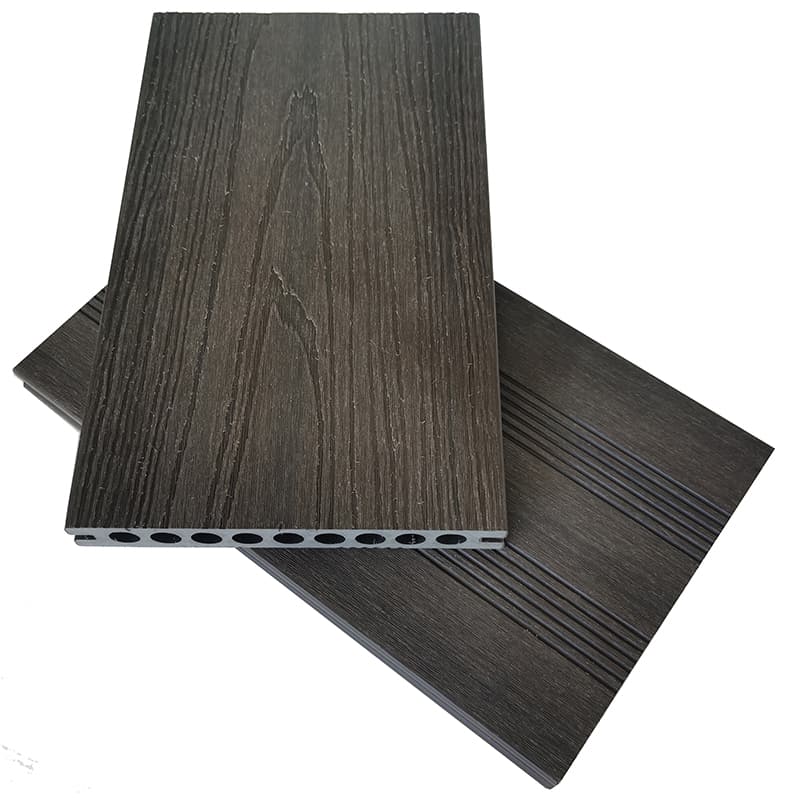
Some WPC decking products feature wood-grain surfaces, while others use brushed or sanded finishes. Fence boards are available in different profiles and designs as well. Combining products with compatible visual characteristics can make an outdoor project feel more deliberate and complete.
For a natural-looking garden, wood-grain decking and fence boards with a similar visual character can work well together. For a more contemporary space, simpler board profiles and restrained color combinations may be more suitable.
Before purchasing, compare the following details:
- Surface texture: Check whether the decking and fence have compatible finishes, such as pronounced wood grain or a more understated surface.
- Board proportions: Consider the apparent width and thickness of the boards in relation to the size of the outdoor area.
- Installation direction: Horizontal fence boards can create a different visual effect from vertical arrangements and should be considered alongside the decking layout.
- Product construction: Traditional and co-extruded WPC products may differ in surface appearance and construction, so their compatibility should be confirmed rather than assumed.
The aim is not to make the decking and fence identical. It is to select products that look appropriate together and suit the overall design.
4. Select the Right Decking and Fence Products for Their Different Roles
Although decking and fencing can share a similar appearance, they perform different functions and should be selected according to their individual requirements.
Decking must provide a suitable surface for walking and everyday outdoor use. Its profile, support requirements, drainage arrangements, and installation method should be considered in relation to the intended application.
Fencing serves a different purpose. Depending on the design, it may define a boundary, provide screening, or create a visual division between outdoor areas. Panel dimensions, post arrangements, fixing systems, and the required level of privacy are therefore important selection factors.
When comparing WPC fence panels with decking products, buyers should avoid assuming that similar materials automatically mean identical installation requirements.
A practical selection process includes:
- Choose the decking profile according to the intended use and installation conditions.
- Select fence panels that suit the required boundary layout and appearance.
- Confirm the relevant fixing systems and supporting structures for both products.
- Check whether the selected colors, finishes, and product series can be coordinated.
- Review the technical information for each product before finalizing the specification.
This approach helps ensure that the products complement one another without overlooking their separate functional requirements.
5. Plan Installation Compatibility Before Ordering
A consistent design is easier to achieve when decking and fencing are considered together before installation begins. Ordering the products separately without checking their dimensions or construction details may lead to unnecessary adjustments on site.
Start by preparing a layout showing the decking area, fence positions, entrances, corners, and transitions between different surfaces. This drawing can help identify where the two systems meet and where additional space or finishing components may be needed.
Several details deserve particular attention.
Ground preparation: The decking support structure and fence posts may require different preparation methods. Their positions should be coordinated before the installation area is completed.
Drainage and clearance: Make sure the layout accommodates water drainage, suitable clearances, and access for cleaning or maintenance. The fence should not obstruct drainage arrangements around the deck.
Fixing systems: Decking and fencing may use different fasteners, supports, and installation procedures. Confirm the requirements for each product rather than assuming the same components can be used throughout the project.
Edges and transitions: Consider how the decking ends near fence posts, gates, steps, and other fixed structures. Proper planning helps produce cleaner edges and reduces the need for improvised finishing work.
For larger projects, reviewing the product drawings and installation instructions before ordering is particularly useful. It allows the installer and buyer to identify potential conflicts before materials arrive on site.
6. Prepare One Coordinated Purchasing Plan
Ordering decking and fencing as part of one project makes it easier to manage product selection, delivery, and installation. It also gives buyers an opportunity to check the overall design before committing to individual products.
A purchasing plan should list each product separately while keeping the complete project in view.
| Item | Information to confirm | Purpose |
| Decking boards | Product series, profile, dimensions, color, and available lengths | Cover the planned floor area |
| Fence panels or boards | Profile, dimensions, color, and intended arrangement | Define boundaries or create screening |
| Supporting components | Compatible joists, posts, and other structural elements | Provide suitable support for each system |
| Fasteners and accessories | Product compatibility and installation requirements | Secure the components correctly |
| Finishing components | Edge treatments, corners, and gate transitions | Complete the appearance and connections |
The exact quantities should be calculated from the project drawings and the specifications of the selected products. Do not estimate fence requirements from the decking area, as the two products are measured and ordered differently.
It is also sensible to confirm product availability, packaging quantities, minimum order requirements, and delivery arrangements before placing the order. If the decking and fence use different product series, verify their colors and finishes with physical samples where possible.
7. Build a Consistent Outdoor Design with the Right Product Range
A coordinated outdoor project does not require every component to come from the same product series. What matters is that the selected materials meet their functional requirements and create a coherent overall design.
A range of WPC products gives buyers more flexibility when planning different applications. Traditional WPC, PE co-extruded WPC, and ASA co-extruded WPC have different product constructions and finishes. The most appropriate choice depends on the intended application, appearance, installation conditions, and available specifications.
For example, a buyer may select one decking profile for a terrace and a different fence design for the boundary. The combination can still work well if the colors, textures, and proportions are considered together.
Before making a final decision, review the product information rather than relying on appearance alone. Confirm the specifications, installation requirements, and compatibility of the selected components. This is especially important for projects that combine multiple product types or require custom layouts.
Conclusion
Coordinating decking and fencing begins with a clear outdoor layout, followed by careful consideration of color, texture, product construction, and installation requirements. By planning these elements together, buyers can create a consistent outdoor space while reducing the risk of mismatched finishes or avoidable installation adjustments.
Hefei Tuwei New Material Technology Co., Ltd. provides a range of WPC products, including traditional and co-extruded options for different applications. When selecting WPC decking and fencing for a shared project, buyers should compare the relevant product specifications and confirm compatibility before ordering. A coordinated purchasing plan helps bring the design together and supports a smoother installation process.
Frequently Asked Questions
1. Should WPC decking and fencing be the same color?
Not necessarily. Matching colors can create a unified appearance, while complementary or contrasting shades can help distinguish the floor from the surrounding boundary. The choice should suit the building exterior and overall outdoor design.
2. Can decking and fence panels from different WPC product series be used together?
They may be suitable for the same project, but compatibility should be checked. Compare their colors, surface finishes, product specifications, and installation requirements before ordering.
3. What should buyers check before installing decking and fencing together?
Review the site layout, ground preparation, drainage, support structures, fixing systems, and connections around edges and posts. Planning these details in advance helps reduce installation difficulties.
4. Can decking and fencing be ordered as one project?
Yes. Preparing one purchasing plan makes it easier to coordinate colors, product availability, delivery, and installation. However, decking and fencing quantities should be calculated separately according to their respective dimensions and layout requirements.