



Table of Contents
Installing a fence on uneven ground requires more planning than working on a level surface. Changes in elevation affect panel alignment, post positioning, ground clearance, and the overall appearance of the finished boundary. With the right layout and installation method, wpc composite fencing can be used to create a neat, consistent boundary around a sloped garden while complementing the surrounding landscape.
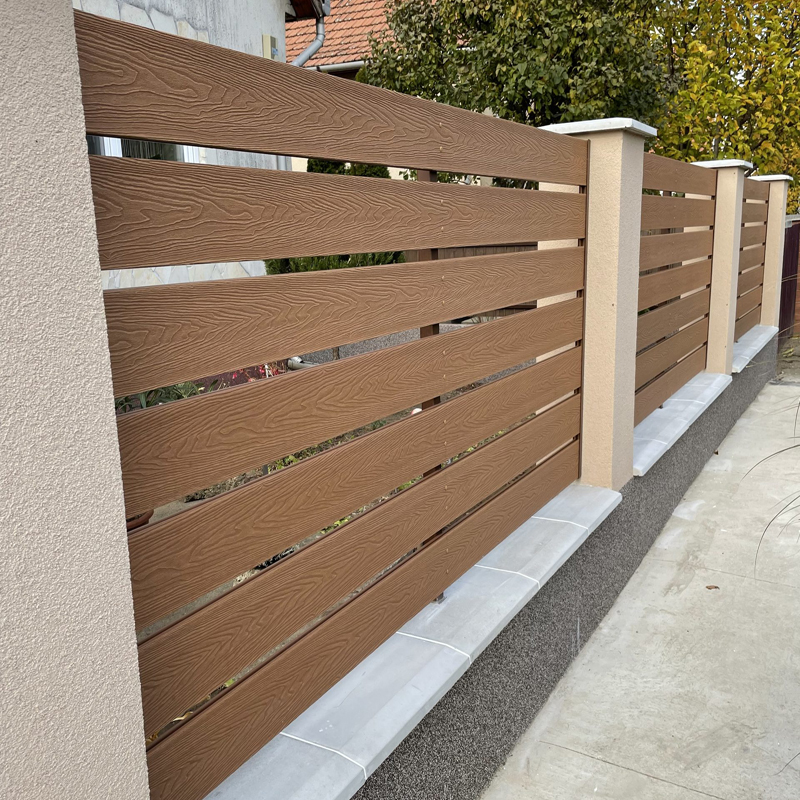
Before starting the project, it is important to understand the slope, select suitable fence components, and determine how each section will follow the ground. TOOWIN provides a range of WPC composite fence products, including Stripe Composite Fence, Co-extrusion WPC Fence, and 3D Wood Grain WPC Fence. Its product range also includes fence boards and components that can be considered when planning a suitable system.
1. Assess the Slope Before Installing the Fence
The first step in wpc fence installation is to survey the garden and identify how the ground changes along the proposed fence line. A gradual slope may be manageable with a consistent layout, while a steep or irregular incline may require shorter sections or more detailed structural planning.
Measure the elevation difference between key points and mark the proposed positions of the fence posts. Pay attention to sharp changes in ground level, drainage channels, retaining walls, and areas where soil may shift after heavy rain.
It is also important to confirm property boundaries and check local requirements for fence height and placement. Accurate measurements help determine the number of panels, posts, rails, and other components needed, reducing unnecessary cutting and material waste.
2. Choose Between Stepped and Sloped Fence Layouts
Two common approaches can be considered when planning sloped garden fencing: a stepped layout and a layout that follows the slope. The best choice depends on the ground profile, the fence system, and the desired appearance.
Stepped fence layout
With a stepped design, each fence section remains level, while the next section starts at a different height. This creates a series of small steps along the slope.
This method can be suitable for gardens with noticeable changes in elevation. It provides clearly defined panel sections and can simplify alignment when the selected fence system requires level installation. However, the gaps beneath panels may vary with the terrain, so ground clearance and privacy need to be considered during planning.
Fence layout that follows the slope
A slope-following layout keeps the top line of the fence closer to the natural contour of the ground. It can create a more continuous appearance on gradual inclines.
However, not every composite fence system can accommodate angled installation. Rigid panels and interlocking boards may need to remain level, depending on their connection design. Before choosing this approach, confirm whether the selected product permits angled installation and whether the posts, rails, and fixings can accommodate the proposed arrangement.
3. Select Suitable Fence Boards and Components
The choice of composite fence panels affects both installation and the final appearance. Panel dimensions, connection methods, post spacing, and surface design should be considered together rather than selected independently.
TOOWIN’s product range includes the Stripe Composite Fence, Co-extrusion WPC Fence, and 3D Wood Grain WPC Fence, with listed finished fence products measuring 1800 × 1800 mm. The website also lists WPC fence boards in different profiles, providing options for projects that require a board-based configuration.
When reviewing these products for a sloped garden, check the following details with the supplier:
- Whether the panel system supports stepped installation or can follow an incline.
- The recommended post spacing and foundation requirements.
- The permitted cutting methods and minimum clearances.
- Whether the system uses dedicated posts, rails, or metal structural components.
- The expansion gaps and fastening requirements specified for the selected boards.
These details should be confirmed for the exact model. A fence designed for level ground should not automatically be assumed suitable for angled installation.
4. Position the Posts and Prepare the Foundations
Posts provide the main structural support for a composite fence. On sloped ground, their positions must be planned carefully to maintain alignment and resist movement.
Mark the post locations according to the selected system’s installation requirements. Check the spacing and vertical alignment of each post before fixing it in place. Where the ground changes elevation, avoid estimating post heights by eye; establish a consistent reference line for each section of the fence.
Foundation depth and post anchoring should reflect the soil conditions, fence height, wind exposure, and applicable local requirements. Loose soil, areas with poor drainage, and locations near retaining walls may require additional assessment.
If the project uses a metal support structure, confirm that the posts and connections are compatible with the selected WPC boards. TOOWIN notes that its composite fencing can be combined with a metal main structure, but the specific configuration and structural requirements should be verified before installation.
5. Install the Panels and Check Alignment
Once the posts and foundations are ready, install the fence boards or panels according to the manufacturer’s instructions. For a stepped layout, establish the height of each section before securing the boards. For a slope-following design, confirm that the system permits the required angle.
During assembly, check that:
- Posts remain vertical and securely fixed.
- Panel edges and joints are aligned consistently within each section.
- Boards are supported and fastened according to the product instructions.
- Required expansion gaps are maintained.
- The bottom of the fence does not obstruct drainage or sit in persistently wet soil.
Avoid forcing rigid boards into position to match an uneven slope. This can place unnecessary stress on the connections and affect the finished appearance. If the ground profile makes standard panels difficult to fit, reconsider the section lengths or consult the supplier about an appropriate installation arrangement.
6. Check Ground Clearance, Drainage, and the Finished Appearance
A successful installation should follow the terrain without creating avoidable maintenance problems. Check the clearance beneath the fence, particularly where the slope changes direction or the ground is exposed to runoff.
Large gaps may affect privacy or allow small animals to pass through, while insufficient clearance can cause contact with soil and debris. Any additional ground-level treatment should be compatible with the fence system and should not interfere with drainage.
After installation, inspect the full fence line from several angles. Look for uneven step heights, leaning posts, loose connections, and inconsistent panel spacing. Also check gates and access points, where changes in elevation may affect opening and closing.
Regular visual inspections can help identify movement or damage early. Cleaning requirements and other maintenance procedures should follow the instructions for the selected WPC product.
Conclusion
Installing wpc composite fencing on a sloped garden starts with accurate site measurements, a suitable layout, and a compatible support system. Stepped sections may work well on more pronounced changes in elevation, while a contour-following design may suit gradual slopes when the fence system allows it. Careful post positioning, correct fastening, and adequate drainage are essential to achieving a stable and visually consistent result.
TOOWIN offers several composite fencing styles, along with different board profiles and metal-structure combination options. By confirming the installation requirements of the chosen model before construction, homeowners, contractors, and project planners can develop a fence layout that responds to the terrain and the practical needs of the outdoor space.
Frequently Asked Questions
1. Can WPC composite fencing be installed on a sloped garden?
Yes, it may be possible, depending on the fence design and the degree of the slope. A stepped layout is one option, while a contour-following arrangement may be suitable for some systems. Always check the manufacturer’s installation instructions first.
2. Is a stepped or slope-following fence layout better?
Neither approach is best for every project. Stepped layouts can suit more noticeable changes in elevation, while contour-following layouts can create a continuous top line on gradual slopes. The panel design and permitted installation method should guide the decision.
3. Can composite fence panels be cut to fit uneven ground?
Some boards can be cut to size, but cutting does not automatically make a panel suitable for angled installation. Check the product’s cutting instructions, structural requirements, and edge-finishing recommendations before modifying any components.
4. What should be checked before installing a WPC fence on a slope?
Measure the elevation changes, confirm property boundaries, assess soil and drainage conditions, and check local fence regulations. You should also verify post spacing, foundation requirements, panel compatibility, and the installation method recommended for the chosen model.
5. Does TOOWIN offer different WPC composite fence styles?
Yes. Its listed products include Stripe Composite Fence, Co-extrusion WPC Fence, and 3D Wood Grain WPC Fence. Buyers should confirm the dimensions, components, and suitability of the specific model for a sloped installation with the supplier.